Radiant floor heat and hot-water baseboard heat are both hydronic systems: a boiler heats water and circulates it through your home. However, they differ significantly in installation requirements, day-to-day comfort, and project cost. For homeowners in Ocean County, the right choice usually depends on the home’s existing setup, whether floors are open for renovation, and the scope of the work planned.
How Hydronic Radiant and Baseboard Heat Work
Both systems begin with the same essential equipment: a properly sized boiler. The boiler heats water, and a circulator moves that hot water through closed-loop piping to deliver heat to individual rooms or zones. Once the water releases its heat, it returns to the boiler to be reheated.
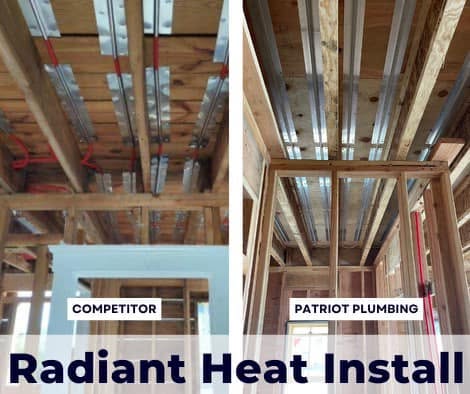
With radiant heat, the piping is installed beneath the finished floor, within a concrete slab, or in a specialized panel system. The floor surface gently warms and radiates heat upward into the room. If you have wondered, “How does radiant floor heat work?” the answer is straightforward: the floor itself becomes a large, low-temperature heat source rather than relying on a small heating unit along the wall.
Hot-water baseboard heat uses pipes that run through finned units installed around the perimeter of a room. As hot water moves through the tubing, the fins warm the surrounding air. That heated air rises, pulling cooler air toward the baseboard and creating a convection cycle. Patriot Plumbing services both Radiant & Baseboard Heat
systems throughout Toms River, NJ, Ocean County, and southern Monmouth County.
Comfort: Even Floor-Level Warmth vs. Perimeter Heating
Radiant heat is often chosen for its exceptionally even comfort. Because warmth comes from a broad area beneath the floor, it reaches people and furnishings at floor level and can reduce the cool-floor feeling common in bathrooms, kitchens, basements, and tiled rooms. There are fewer hot and cold pockets, no visible heating units, and generally less air movement.
Baseboard heat warms a room from the walls inward. A properly designed and balanced system can be very comfortable, but rooms may feel warmer near the baseboard first, with the heat gradually circulating upward. Furniture, drapes, and rugs can also interfere with airflow if they block the units.
Neither option is automatically the answer to which heating system is better in NJ. Comfort depends on insulation, window performance, zoning, boiler output, thermostat placement, and the condition of the system. For many established homes in Toms River, a well-maintained baseboard system remains a reliable and comfortable solution.
Installation Cost and Project Complexity
Radiant floor heating installation in Ocean County is usually more complex than replacing or repairing baseboard. Access to the floor assembly is the key factor. Installing tubing during new construction or while floors are already open can be efficient. Retrofitting radiant heat into a finished home may require removing flooring, adjusting floor height, modifying doors or trim, and coordinating with other trades.
Baseboard is generally simpler to install in an existing home because the units are accessible along the walls and the piping may already be in place. Replacing damaged sections, extending heat to an addition, or updating a zone can often involve less disruption than opening finished floors.
Up-front price should not be the only consideration. Radiant heat can add lasting comfort and may be especially appealing where bare floors are common. Baseboard can be the more cost-conscious, practical route when the existing system is working well or the project does not justify a major floor renovation. Patriot Plumbing can evaluate the layout, heat loss, existing piping, and renovation plans before recommending a direction.
When Radiant Heat Is the Right Fit
Radiant heat makes the most sense when access to the floor is already part of the project. It is an excellent option for new construction, full-home renovations, additions, bathroom remodels, finished basements, and rooms receiving new tile or engineered flooring. It can also be a smart choice when homeowners want clean walls without baseboard units and a more consistent, low-profile source of warmth.
If you are asking, “Should I switch from baseboard to radiant heat in NJ?” consider whether you are already opening the floors. Converting an entire occupied home solely to gain radiant heat can be expensive and disruptive. But converting a remodeled bathroom, kitchen, addition, or basement while keeping functioning baseboard elsewhere can provide a practical middle ground.
When Baseboard Is the More Practical Choice
Baseboard is often the better choice for repairs, targeted upgrades, additions, and homes with an existing hydronic system that performs well. It is also a sensible choice when preserving finished flooring is a priority. Rather than replacing a whole system, correcting circulation issues, adding a properly planned zone, or upgrading aging components may restore comfort at a much lower project cost.
For example, baseboard heat not working in one room in Ocean County does not necessarily mean the entire system needs replacement. The issue may be trapped air, a closed or failed zone valve, a circulator problem, a thermostat issue, insufficient flow, or baseboard that is undersized for the room. A professional diagnosis can identify the cause before you commit to a larger project.
Why Boiler Sizing Matters for Both Systems
Radiant and baseboard systems rely on the boiler’s ability to meet the home’s heat loss during cold weather. A boiler should be selected using a proper load calculation, not just the size of the old unit. The heating distribution system and domestic hot-water needs, if connected, must also be considered.
An undersized boiler may run for long periods without bringing rooms to the desired temperature, struggle when several zones call for heat, and leave distant rooms or additions feeling chilly. It can also create unnecessary wear from constant operation. Oversizing has drawbacks, too, including inefficient short cycling. Patriot Plumbing can assess whether your current equipment and heat distribution are matched correctly and help you explore Boilers
that fit your home’s needs.
Common Hot-Water Baseboard Problems
Cold zones are among the most common baseboard complaints. Air trapped in the piping can prevent hot water from circulating fully, while a failing zone valve may stop a section of the home from receiving heat. Other issues include a malfunctioning circulator, low system pressure, thermostat problems, sediment buildup, or obstructed airflow around the units.
Do not ignore a room that stays cold, banging or gurgling pipes, uneven temperatures, or a boiler that seems to run constantly. Addressing these warning signs early can help prevent a small repair from becoming a no-heat emergency.
FAQ
Is radiant heat more efficient than baseboard heat?
Radiant systems can operate effectively at lower water temperatures in many designs, but actual efficiency depends on the boiler, controls, insulation, system design, and how the home is used. The best choice should be based on a professional evaluation rather than efficiency claims alone.
Can I use radiant heat with my existing boiler?
Possibly. The boiler must have enough capacity and the system must be designed with the right controls, circulators, mixing equipment, and zoning. A compatibility assessment is important before installation.
Why is one baseboard zone cold while others work?
Common causes include air in the lines, a zone valve failure, a circulation issue, a thermostat problem, or a blockage. A technician can determine which component is preventing heat from reaching that zone.
Is radiant heat only for bathrooms?
No. It can be installed throughout a home, in additions, basements, kitchens, and bedrooms. Bathrooms are simply a popular place to begin because warm tile floors are especially noticeable there.
Should I repair or replace my baseboard system?
If the system is otherwise sound, a repair may be the most practical option. Replacement may make more sense during a major renovation, when equipment is outdated, or when recurring problems and comfort concerns justify a broader upgrade.
Whether you are planning a renovation, considering a radiant upgrade, or need baseboard heat repair in Toms River, Patriot Plumbing is ready to help. Call 732-929-3529 or request a free estimate for service in Ocean County and southern Monmouth County.