A dependable plumbing subcontractor keeps a project moving by arriving prepared, coordinating with the build schedule, documenting the scope clearly, and treating inspections as milestones—not surprises. The wrong plumbing sub can create costly rework, trade conflicts, missed inspections, and uncertainty around utility connections. For general contractors and builders, the difference comes down to licensing, complete new-construction capability, responsive communication, and real local knowledge.
Patriot Plumbing helps builders in Toms River, NJ, Ocean County, and across New Jersey line up construction plumbing work with the practical planning a jobsite demands. Whether you are bidding a single custom home, a coastal elevation project, or a larger development, selecting the right plumbing subcontractor NJ
teams can rely on is a project-protection decision.
Start With New Jersey Licensing and Code Readiness
Before awarding a plumbing scope, verify that the contractor is properly authorized to perform plumbing work in New Jersey. State rules restrict plumbing work to licensed master plumbers, authorized plumbing contractors, and qualifying employees working under the required supervision. That matters long before the final fixture installation: it affects permit applications, responsibility for the work, inspection coordination, and the confidence that comes with having a qualified team behind the installation.
A licensed plumbing sub NJ
builders choose should understand the plumbing and fuel-gas requirements that apply to the project, as well as the local enforcement process. New Jersey construction work is governed through the Uniform Construction Code, while local construction and plumbing officials review plans and inspect work in the field. Ask a prospective subcontractor who will oversee the work, how permits will be handled, and how the team prepares for required inspections.
Patriot Plumbing approaches code compliance as part of the construction plan—not a last-minute check before walls close. That helps general contractors reduce uncertainty at rough-in, gas-piping, water, sewer, fixture, and final inspection stages.
Expect a Full New-Construction Plumbing Scope
When comparing bids, make sure each proposal covers the same phases. A capable plumbing subcontractor new build
partner should be able to define responsibility from underground connections through final trim-out. Vague inclusions invite change orders, gaps between trades, and disputes about who owns the next step.
For most new-construction jobs, the plumbing scope may include:
- Water main tap and water-service connection: Coordinating the route, materials, approvals, and connection details needed to bring potable water to the structure.
- Sewer main tap and building sewer work: Planning the connection path, elevations, cleanouts, and testing requirements before slabs, landscaping, or hardscape make access difficult.
- Underground and rough-in plumbing: Installing drain, waste, vent, and water-distribution piping in coordination with foundations, framing, mechanical systems, and electrical work.
- Gas lines: Laying out and installing properly sized gas piping for furnaces, water heaters, ranges, fireplaces, generators, or other specified equipment.
- Trim-out and fixture installation: Completing valves, faucets, toilets, tubs, showers, water heaters, and other specified plumbing fixtures after finishes are ready.
- Inspection readiness: Testing systems, maintaining accessible work areas, and scheduling inspections at the correct point in the sequence.
Patriot Plumbing provides New Construction Plumbing
services with the goal of making scope ownership clear from the first estimate through project closeout.
Scheduling and Communication Keep the Build on Track
Plumbing rarely happens in isolation. The underground work must align with excavation and foundation schedules. Rough-in must coordinate with framing, HVAC, electrical, and insulation. Trim-out must be timed around cabinetry, tile, countertops, and finish work. A plumber who cannot communicate schedule needs early can put the entire critical path at risk.
Ask potential subs how they handle schedule updates, site-readiness confirmations, material lead times, and inspection failures or corrections. You want a partner who identifies constraints quickly, confirms the next required milestone, and communicates changes before crews arrive to find a conflict. Reliable communication is especially valuable when plans evolve in the field or when utility and municipal timing changes.
For builders across statewide NJ construction coverage, Patriot Plumbing works to provide the responsiveness general contractors need: clear coordination, realistic sequencing, and a point of contact who understands that every delayed trade can affect the handoff to the next one.
What a Free Written Estimate Should Include
Builders need more than a single total to bid confidently. A free written estimate should establish the assumptions behind the number, so the GC can compare proposals fairly and recognize exclusions before the contract is awarded.
Look for a proposal that identifies the project address or plan set, the plumbing phases included, fixture allowances or specified products, labor and material assumptions, gas-piping scope, water and sewer connection assumptions, permit or inspection responsibilities, and exclusions that may affect price. It should also clarify whether utility fees, trenching, restoration, specialty equipment, upgraded fixtures, or unforeseen site conditions are included.
The best estimate is not necessarily the lowest initial figure. It is the one that makes the scope understandable. Patriot Plumbing offers free construction plumbing estimates so builders can see what is covered, ask the right questions, and protect their bids from avoidable ambiguity.
Why Ocean County Knowledge Matters
Local experience has real value on a construction site. In Ocean County, soil conditions, coastal groundwater considerations, access constraints, municipal permitting practices, and utility-provider procedures can influence how a plumbing job is planned. A contractor familiar with Toms River, NJ, and the surrounding market can anticipate practical issues earlier and communicate in the language local projects require.
Relationships and familiarity do not replace code compliance or project-specific engineering. They do, however, help a plumbing partner navigate routine coordination more efficiently—whether that means preparing for local inspections, planning utility taps, or identifying site conditions that deserve attention before the crew mobilizes.
House Lift Plumbing Requires Specialized Planning
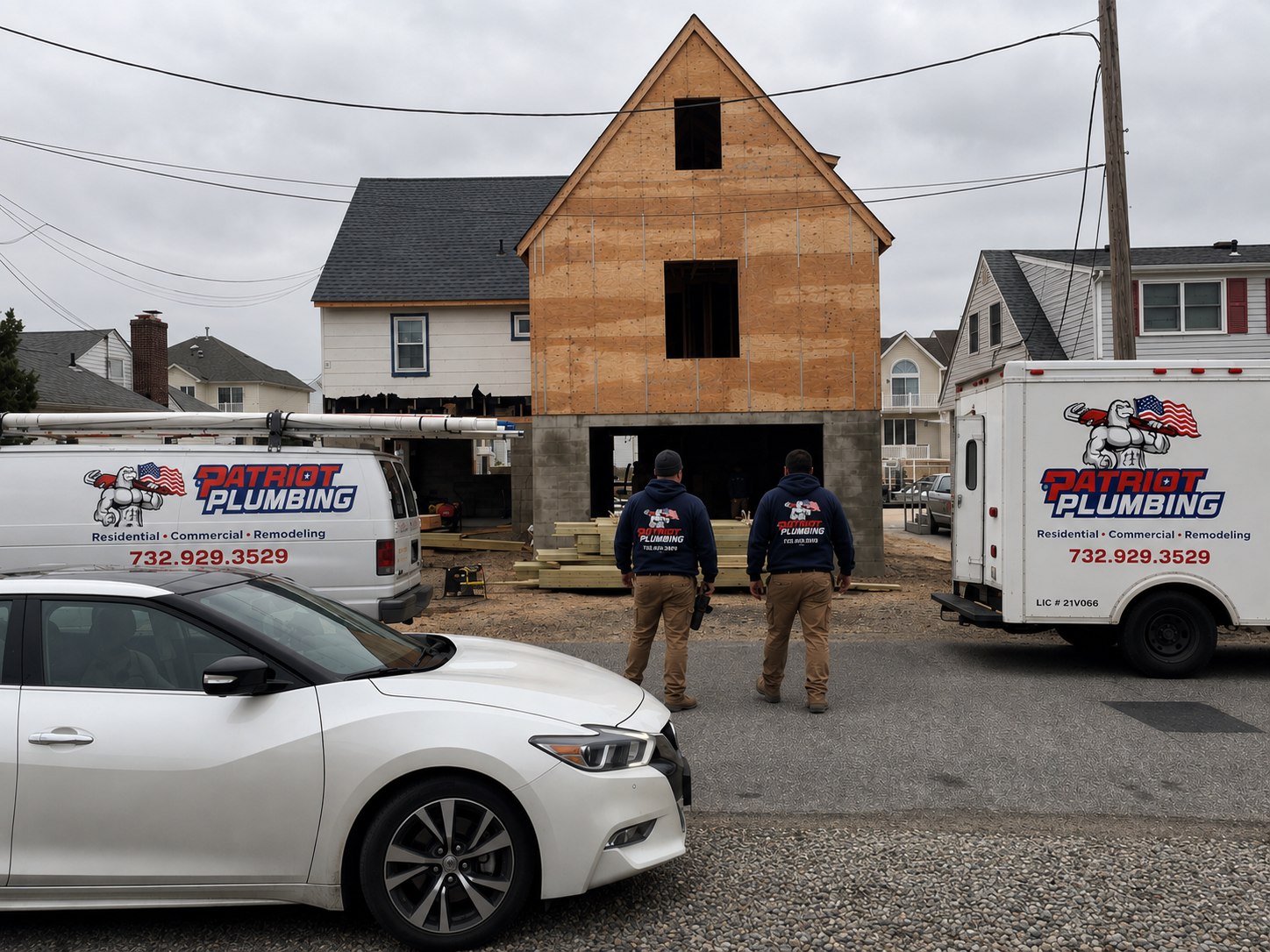
House lifts are a common reality in coastal Ocean County, where flood-risk mitigation and FEMA elevation requirements often lead owners to raise existing homes. Plumbing is not an afterthought in these projects. The work may require careful disconnection and reconnection, rerouting of water, waste, vent, and gas systems, new piping elevations, and close coordination with lifting, foundation, and restoration teams.
For general contractors, the key is bringing the plumbing subcontractor into the plan early. Patriot Plumbing can help evaluate the plumbing implications of a house lift so the scope reflects the new elevation, access requirements, inspections, and final tie-ins—before the project reaches a costly decision point.
Choose a Plumbing Partner Built for Construction
The right sub helps the project feel predictable: the scope is written, licensing is in place, rough-in is coordinated, inspections are anticipated, and the crew communicates when conditions change. Patriot Plumbing supports builders throughout Ocean County, Toms River, NJ, and statewide New Jersey with construction-focused plumbing expertise.
Explore Patriot Plumbing’s Construction
services, or call 732-929-3529
to request a free estimate for your next construction plumbing bid.
FAQ
How do I find a reliable plumbing subcontractor in NJ?
Verify New Jersey licensing, ask for a written scope, confirm experience with comparable new-construction work, and discuss scheduling, inspections, utility connections, and communication expectations before awarding the job.
What should I look for in a plumbing sub for new construction?
Look for complete phase coverage, clear estimating, code knowledge, gas-line capability where required, inspection preparation, dependable scheduling, and experience coordinating with other construction trades.
Does a plumber handle water and sewer taps on a new build?
Often, yes—but responsibilities vary by municipality, utility, site conditions, and contract. Confirm exactly who is responsible for applications, fees, excavation, taps, connections, testing, and restoration in the written estimate.
Why should plumbing rough-in be scheduled carefully?
Rough-in must occur after the site and framing are ready but before walls and finishes conceal the work. Proper sequencing prevents rework, keeps other trades moving, and supports timely inspections.
Can a plumbing subcontractor help with a coastal house lift?
Yes. A qualified contractor can assess existing piping, plan disconnection and reconnection, accommodate the new elevation, and coordinate plumbing work with the broader lift and restoration schedule.